Katherine Scott Crawford is an award-winning writer and college English teacher. Keowee Valley, her debut novel, is an historical adventure and romance set in the Revolutionary-era Carolinas and in the Cherokee country. Forthcoming from Bell Bridge Books in September 2012.
Welcome!
Book Club News…
Just scheduled my first book club event for KEOWEE VALLEY. Can’t wait to meet with the Wednesday Afternoon Book Club in April 2013 in Greenville, South Carolina, to talk history, romance, adventure, and the wild colonial frontier!
I love hanging out with groups of folks who adore books. If you’d like to read KEOWEE VALLEY in your book club, and would like for me to join in on the date that you’re discussing it, please let me know. If I’m close enough to make it there in person, I’ll drop by. And if I’m not, let’s set up a Skype date.
* KEOWEE VALLEY is set for publication in September 2012, and will be available in Trade Paperback and eBook formats for purchase online and from any book store.
Book Buzz for Keowee Valley
I recently came across this mention of KEOWEE VALLEY in RT Book Reviews, in a section called “Forewords: The Books Before the Buzz.” (Scroll down to “Exciting Debut Author.”)
It was written in October, only a couple of months after the rights news for KEOWEE VALLEY was announced in Publishers Marketplace. How’d I miss it?
So exciting–I’m glad people are looking foward to the story!
Images from Keowee Valley
My final (I hope) edits for Keowee Valley have been sent back to my editor, who’s in the process of going through the novel for small errors and discrepancies. Then it goes to the copyeditor, and then on to the publisher, and then back to me. This summer, I’ll be collaborating (though the publisher, of course, has the final say) on cover art. It’s a fascinating process, and I continue to be thrilled by it. I can’t imagine that this–seeing my novel come to life–would ever get old.
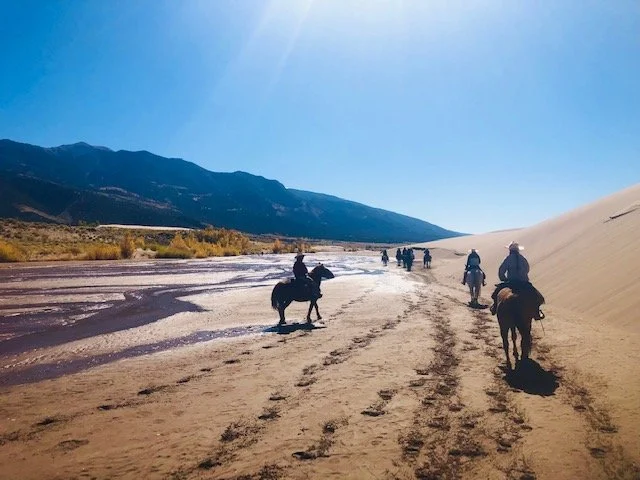
Since Keowee Valley is such a place-based novel, and in my heart I am very much a Southern writer (and we’re obsessed with place) I thought I’d add another page to my website, dealing with images from the novel. Here, I’ve included photos of places and things important to the story. And while the places in the photos may not look exactly as they did 244 years ago, I hope it’ll give readers a sense of the journey my protagonist, Quinn, took–into a gorgeous, dangerous, and wild new land.
The setting of Keowee Valley certainly inspired the story. Though the novel moves from colonial Charleston, South Carolina, into the South and North Carolina mountain frontier, and into the deepest reaches of the Cherokee country (present-day Tennessee) and back, the main setting of the novel is a place I dearly love: Oconee County, South Carolina. Today, this part of the Upcountry of South Carolina is dotted with recreational lakes, which were incredibly gorgeous and biodiversely rich river valleys and natural gorges flooded in the mid-twentieth century.
It’s a land I’ve been fascinated with since I was a small child, filled with Cherokee place names, rushing rivers and creeks, unusual plants and animals, and those haunting blue mountains–and I always wondered about the powerful and mysterious people who claimed it as home, long before I ever got there. So, in many ways, that’s where the story started.
I hope the images add something special to the “About the Book” page of my author web site. And I hope you enjoy them!
* Photo taken from a Google search of images; attribution to come. I do not intend to sell or distribute any photo in any way.
Editing a Novel: The Forest for the Trees
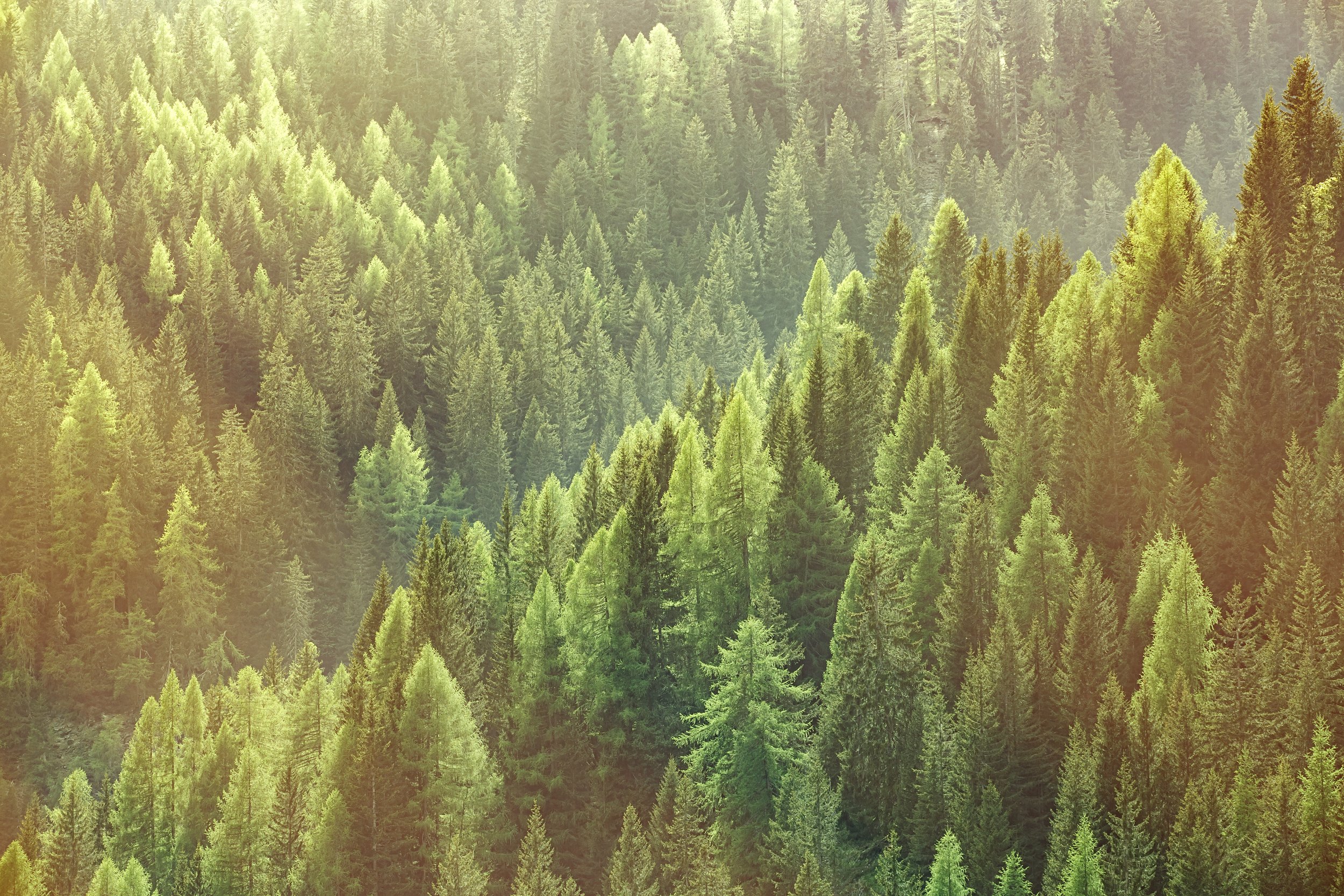
“When you write a book, you spend day after day scanning and identifying the trees. When you’re done, you have to step back and look at the forest.”
~ Stephen King, from On Writing
Throughout the month of March, my editor at Bell Bridge Books and I have been deep in the editing process with KEOWEE VALLEY. This has been a month of late nights and early mornings, of less exercise and more time at the desk, of red-rimmed eyes and deeper wrinkles. I wouldn’t change it for a thing.
William Faulkner, notorious drinking writer that he was, once said that when he was writing, he “always kept [his] whiskey within reach.” I can relate to this. If not for the toddler, husband, dog, house, and job, I’d likely spike my coffee in the morn and partake heavily of the vino at night. But my drug of choice, especially during the editing process, is straight-up coffee.
Coffee. Sweet, sweet nectar of the gods.
The first time I drank coffee was finals week my freshman year at Clemson University. My dorm-mates and I had plugged in a coffee pot in the study room on our hall and had a friend wedge a chair under the door knob outside, to lock us in. I had a lot of excess energy in those days, and I’m pretty sure I remember my friends beating on the door, begging the girls outside to get me out of there after I’d had a few cups. I’m pretty sure there were random push-ups, jogging-in-place, and the singing of “The Star Spangled Banner” involved. I’m sorry, college friends. So very sorry.
Now that the editing process is (basically) over on my novel, I can say I know without a shadow of doubt that there are two things every author needs after her novel’s been bought:
1. Coffee. Lots of it. Perhaps entering through an I.V.
2. A great editor.
Luckily, I have both of these. Not the I.V. of course. That would be icky.
College, now that we’ve broached the subject, was the first time I ever dreamed about what it’d be like to work with an editor. I’d been writing novels and novellas (mostly in spiral notebooks under my desk in science classes) since I was 11 years old, but until I became an English major and began having real discussions about my writing with my professors, I’d never considered the nuts-and-bolts realities of writing as a career.
Up to now, oddly enough, despite the fact I’ve published work in newspapers, magazines and literary journals, and have been lucky enough to win some awards, I’d never really had my writing edited. Unless you consider the copyeditors at the newspaper where I worked right out of college standing over my desk late on Sunday nights, frowning down at me. The conversation usually went like this:
Them: “Uh, Katie. You can’t use this word. It has three syllables.”
Me: “Why not? It’s a great word.”
Them: Silence.
Me: “Shouldn’t we elevate the standards of our readership? You know, write to our readers’ best selves?”
Them: Silence.
Joking aside (though that was no-lie, real conversation I had several times as a 23 year-old reporter), they still didn’t really edit my writing much. No one ever did.
Until now.
Until my novel. My baby. My sweet little 450+ page darling.
I thought it’d be harder, I really did. Family members used to joke with me over the holidays when my writing career was in its youthful beginnings (everyone knew I wanted to write books): “How are you going to feel about being edited?” they’d ask, as if I wouldn’t be able to take it.
The truth is, when it came time–finally–for my first novel to be edited, I was more than ready. I relished the process. Because good editors, great editors, make your work better. And if you’ve an editor like mine, who actually takes the time to explain the choices/changes because she remembers what it was like to be a first-time author, you learn infinitely. And you get better.
I like the King quote at the top of this post because 1) I’m in the forest a lot, and 2) I now know what he means… in a way I wouldn’t have years ago.
Because I’ve been writing an historical novel, I get lost–happily–in research. I like knowing what tree grew where along the Cherokee Path that my protagonist takes into the wild backcountry, like learning about the deadly sandbars her ship would have to pass at the mouth of Charleston Harbor, love discovering that there were black wolves, panthers and elk, and even bison roaming the South Carolina Upcountry in the 1700s. This sort of stuff is my literary crackrock.
I’m also a fan of words. Big, beautiful words that some folks may have to look up. (Can you see my old copyeditor frowning? She wore a permanent scowl when it came to me. Also a uni-brow.) My editor showed me that there’s a place and time for these words. That sometimes, readers don’t want to look things up; that sometimes, these types of words distract from the flow of action, eject the reader from the story like a big, fat stone in a medieval catapult. And no writer wants to catapult her reader over the moat. Especially me. I want them to keep reading.
This is only one example of the many ways I’m learning about popular/commercial fiction versus literary fiction, about how to make a story better. About how to respect my readers. I’ve got a heckuva lot to learn. And I’ve had a great editor guiding me. (Thank you, writing gods. The sacrifice will be left by the back door.)
There’s much more work to be done on KEOWEE VALLEY before it’s published in September. And I’ll keep y’all posted. But for now, it’s back to my coffee and my next novel. Where, hopefully, I’ll have learned enough to consider the whole darn forest.
More Praise for KEOWEE VALLEY & One Fabulous Phone Call
Just received another wonderful blurb, this time from bestselling historical novelist Beverly Swerling:
“In Quincy MacFadden, Crawford creates a feisty, gutsy heroine who survives those fraught years before the American Revolution in Appalachian Indian country, finding love even as she defines the spirit that will create a nation. The frontier equivalent to Abigail Adams in Boston or Dolly Madison in Philadelphia. I read it in one eager, page-turning sitting.”
Swerling is the author of City of Promise, City of Dreams, Shadowbrook, and more. She writes great, big, fabulous
novels about old New York. I love them.
On another note, last week I got a message on my voicemail from one of my literary idols, saying he’d be happy to read KEOWEE VALLEY. I’ve been reading this man’s work since I was 10 years old, and very often he’s the Southern voice in the back of my head when I try to write well. I was, and still am, floored with happiness. More to come!
Ron Rash on Keowee Valley
Recently, I was honored to have author Ron Rash read KEOWEE VALLEY. Here’s what he had to say:
“Katherine Scott Crawford has merged history and drama in this compelling story of one woman’s boldness and courage. Crawford is a fresh and valuable new voice in Southern Literature.”
Rash is the author of the novel Serena (among others), which was a finalist for the 2009 PEN/Faulkner Award for Fiction and is to be made into a major motion picture. He is the Parris Distinguished Professor of Appalachian Cultural Studies at Western Carolina University.
Advance Praise for KEOWEE VALLEY
Many thanks to Darci Hannah and Philip Lee Williams, for their advance praise for Keowee Valley. Lovely words from lovely people–and fabulous writers to boot!
To learn more about the process of gathering quotes and blurbs for a first novel (my process in general), check out this post at The Writing Scott: blurbs-and-quotes-for-first-novel-or.html.
Special Review Copies of Keowee Valley are Here!
A big, beautiful, brown box arrived at my door recently, bearing within it the Special Format Review Copies of my forthcoming historical novel, Keowee Valley. Since my two year-old was napping, I hefted the box in my arms, tip-toed across the hardwood floors of our 1940s house–trying not to trip over the 88 lb black lab at my heels–whipped a knife out of the chopping block, and went to town. I’d like to say that I slit open that box with the elegant precision of a heart surgeon, but since this is a moment I’ve been dreaming about since I was about 12 years old, I abandoned the knife halfway through and ripped, packing tape be damned.
I have to admit, it’s a bit disconcerting to see your own face and name (in my case, three of them) on the covers of an 8 x 10 copy of a manuscript that you know, in less than a year, will be a book. I set the box beside my desk, which currently resembles a Jabba the Hut of exploding English essays, and stared at it. I gave it a wide berth on my way to other rooms. I eyed it warily, as if it’d pounce. And then I got to work.
Finding the right people–authors, industry experts, etc–to review your novel and to perhaps provide a blurb or quote (or, God willing, praise) for it, is an interesting process, one into which I’m delving for the first time. A while back, after I’d finished the novel and found my literary agent, I did some big dreaming, forming a wish-list of authors for the job. Now that my novel has a home with Bell Bridge Books, and I’ve got those big, beautiful review copies in hand, that list has become a very real starting point–and a bit intimidating. Trying to convince experienced authors (some pretty darn famous) to take a chance on a debut novel and its fledgling writer is a much tougher process than you’d think.
So, I’ve reached out via whatever method I’ve found–email, Facebook, home addresses, agent addresses–with a letter of introduction and an earnest, honest request. I know that I’ll be refused by most–they have, after all, their own novels and jobs and families tugging at their time–but maybe, just maybe, one of them will remember what it was like to be in my shoes, and give me a chance. It’ll be interesting to see who does.
One very welcoming group I’ve discovered: bloggers. I’ve already had some great blogger/book reviewers request to read the novel and review it, and I’m hoping to discover plenty more. I just adore folks who love books, and love talking about books: they are my people.
My publisher will be sending out review copies to pertinent reviewers as well, but I’m all about being an active participant in the process. I think it’s an adventure. And as anyone who knows me can tell you, I’m a sucker for a good adventure.
Stay tuned!
And, just because it makes me grin like a giddy kid, here’s another photo of the Special Format Review copy of Keowee Valley: